HandyDandy
Give the care your home needs
Overview
The covid pandemic years brought increased awareness and attention to the home maintenance industry. The realization of the importance of having a comfortable and well-maintained living space has led to a shift in priorities for many people.
"HandyDandy" - a Home Maintenance as a Service (HMaaS) is a promising initiative to address the growing demand for reliable and convenient home maintenance solutions. As an HMaaS provider, HandyDandy could offer a range of services and features to cater to homeowners' needs, making home maintenance more accessible, streamlined, and hassle-free.
TL;DR
Problem
Absence of regular reminders or tracking for home maintenance tasks
Lack of a single brand for multiple areas of home maintenance
High overhead for home/real estate owners
Proposed Solutions
We need to provide homeowners with an inventory of ALL necessary home maintenance tasks with the necessary frequency at which they have to be performed
For the convenience of the users, hiring and management of qualified professionals need to happen without users' involvement.
Project Type
Capstone project
Category: End-to-End Application
Role
UX Researcher
UX Designer
UI Designer
Visual Designer
Goal
Make home maintenance more accessible, streamlined, and hassle-free
Timeline
3 week of research
4 weeks of design and handover of documents
Discover
Absence of regular reminders or tracking for home maintenance tasks
Without a system in place to remind homeowners of upcoming maintenance tasks (e.g., changing air filters, servicing appliances, inspecting roofing), it's easy to overlook important responsibilities.
This can lead to higher expenses in the long run due to potential damages or repairs that could have been prevented with timely maintenance.
Lack of a single brand for multiple areas of home maintenance
Homeowners often face the challenge of dealing with different service providers and verifying their qualifications for various aspects of home maintenance, such as plumbing, electrical, HVAC, and general repairs.
This can lead to inconvenience, coordination issues, and varying levels of service quality.
High overhead for home/real estate owners
Maintaining a property can be costly, especially if issues are not addressed promptly.
Expenses can accumulate quickly, impacting the overall financial well-being of homeowners and real estate investors.
Problem Statement
Goal
We need to understand how our users take care of yearly home maintenance so that we can understand the process and pain points
We need to understand how users feel about using our professionals vs their personal professionals for home maintenance
We need to understand how users keep track of all home maintenance tasks to understand what role this service will play in user’s life
We need to learn about how they keep track of the services
User Interview
The research will involve homeowners and landlords as primary participants. I conducted interviews with 3 users to understand their needs, motivations, and frustrations regarding home maintenance. The participants represented a diverse range of demographics, including single-family homeowners, townhome owners, past and future landlords, individuals who have owned multiple homes, and new homeowners. The following services were identified as essential for the users' home maintenance needs
Home Maintenance Need
Deck Power wash
Door & Window maintenance
Fence / yard Maintenance
HVAC maintenance
Appliance Cleaning
Plumbing insepection
Roof and Gutter cleaning
Smoke, Co, Fire alarm testing
Clean Garbage disposal
Water heater cleaning
Vent/Duct cleaning
appliance maintenance
Insect treatment
And many more…
Interview Summary
Following are the 2 main findings I found by interviewing other homeowners
Knowledge gap: Most interviewees were not aware of everything related to their home or how it requires to maintain it
Struggle to find qualified professionals: Most users do not know what type of license or qualification a professional need to perform certain tasks
Empathy mapping
To synthesize the qualitative data gathered from user interviews, I created an empathy map to identify patterns across users, uncover insights, and generate needs.
User Needs
Convenience: They want a service that helps them avoid severe problems and reminds them to perform routine home maintenance tasks.
Cost-Effectiveness: Users are looking for affordable solutions since homeownership already incurs several expenses.
Time and Energy Constraints: Users often neglect house maintenance due to a lack of time and energy to track and fix issues themselves.
Professional Expertise: Many users feel they are not handy enough to fix home issues and rely on specialists for assistance.
Future Expense Prevention: Users are motivated to keep their houses up to date to avoid potential future expenses.
Landlord Considerations: Landlords want to keep their properties updated to attract and retain tenants.
User Frustrations
Difficulty in Finding Professionals: Users find it challenging to find reliable professionals promptly, leading to issues becoming more severe by the time a professional arrives.
Individual Task Expenses: Maintenance tasks performed individually can be expensive, especially when hiring multiple specialists for different tasks.
Uncertainty about Online Services: Users are uncertain about online service providers and their offerings, questioning if they provide the same quality of service as local professionals.
Lack of Awareness: Users are afraid of not recognizing how a seemingly minor issue can escalate into a more severe problem if left unaddressed.
Identifying the Right Professionals: Users struggle to identify trustworthy professionals who can effectively handle their specific maintenance needs.
Forgetting Routine Maintenance: Users often forget to perform routine maintenance tasks on time, leading to potential problems.
User Motivations
Future Expense Prevention: Users are motivated to keep their houses up to date to avoid potential future expenses.
Landlord Considerations: Landlords want to keep their properties updated to attract and retain tenants.
Competitive analysis
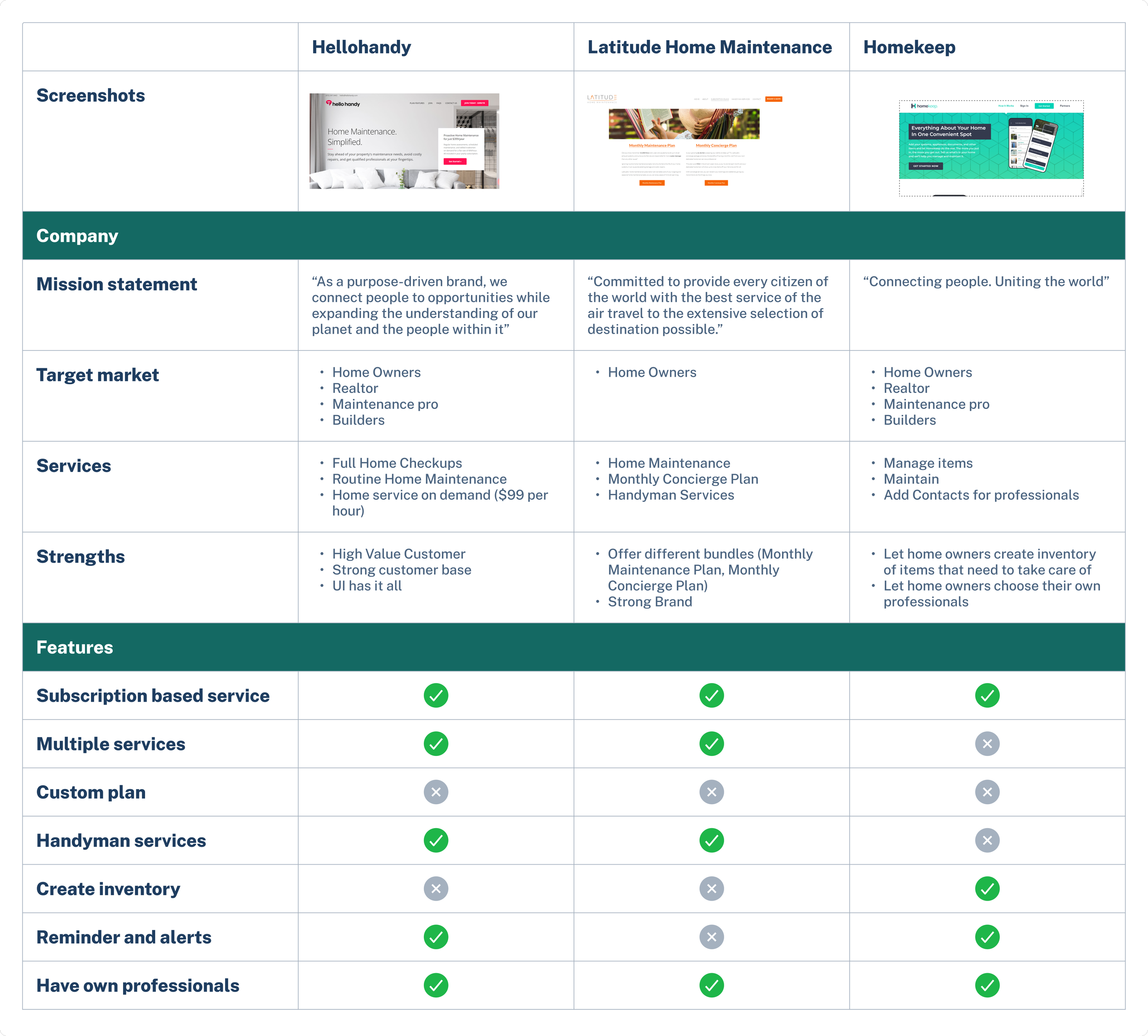
During the competitive analysis, I identified several offerings in the home maintenance service domain, each catering to different regions with varying capacities and features. This indicates a demand for a unified country-wide solution with blue ocean potential, allowing for the introduction of more advanced and innovative offerings. Among the competitors, three companies stood out for providing online services in this domain. Below is a detailed comparison and analysis of these three services
Define
Research findings
I found that:
Based on User Interviews,
The homeowners and landlords are seeking a convenient and cost-effective solution for their home maintenance needs.
They are motivated to keep their properties in good condition to prevent future expenses.
They face challenges in finding reliable professionals, remembering routine maintenance tasks, and dealing with expenses for individual tasks.
Based on Competitive analysis,
There is a significant opportunity for a country-wide footprint service like HandyDandy to establish itself as a leading player in the market.
By integrating advanced features such as personalized maintenance plans, technician notes, and improved customer support, HandyDandy can fill the blue ocean gap and provide homeowners with a comprehensive, convenient, and top-notch home maintenance solution.
The analysis underscores the importance of a well-executed strategy that capitalizes on the competitors' weaknesses while offering unique and innovative services to capture a substantial market share in the industry.
HandyDandy can leverage these findings to develop a service that caters to homeowners' specific requirements and ensures hassle-free and effective home maintenance.
HMW Questions
How might we help Homeowners with regular maintenance requirements so that we can help reduce the stress and anxiety of maintaining the house?
How might we help homeowners remember home maintenance tasks in a timely manner so that we can help reduce the stress and anxiety of maintaining the house?
How might we help homeowners gain more knowledge and experience with home maintenance tasks to reduce stress and anxiety?
How might we help homeowners create a schedule of required home maintenance tasks to avoid larger problems in the future?
How might we help homeowners get in touch with the best professionals for routine maintenance tasks with the regular schedule when homeowners are not aware of the tasks that need to be taken care of?
Persona
After User Interviews when I got into thinking about ‘who’ would use the feature and ‘why’, one persona came to be prominent.
POV Statements
Empathy: We aim to alleviate the stress and anxiety faced by homeowners when it comes to maintaining their houses. We understand that most homeowners lack the necessary knowledge and experience for effective home maintenance.
Education: We strive to educate homeowners about the essential maintenance tasks required for their homes and the appropriate frequency at which these tasks should be performed. Our goal is to ensure that homeowners grasp the importance of regular maintenance in preventing more significant problems down the line.
Convenience: We are dedicated to connecting homeowners with qualified professionals on a regular basis. By doing so, we take the burden off homeowners, allowing them to relax, knowing that their home maintenance tasks are being expertly taken care of.
Savings and Preservation: Our mission is to help homeowners save money while keeping their homes well-maintained. We firmly believe that a well-maintained home can prevent costly expenses in the long run, and we are committed to making this vision a reality for our customers
Develop
Feature set
Integrated Home Maintenance:
Creating a platform or company that offers a comprehensive range of home maintenance services, covering multiple areas, can streamline the process for homeowners. Such a brand could provide a single point of contact, ensuring smoother communication and accountability.
Comprehensive Home Maintenance Plans:
HandyDandy could offer different subscription-based plans that cover various aspects of home maintenance, such as plumbing, electrical, HVAC, pest control, landscaping, and more. These plans could be customizable based on the homeowner's preferences and budget. Subscription-based services could be offered, where homeowners pay a monthly or yearly fee to access scheduled maintenance visits and emergency repair coverage. This model could help reduce the financial burden and ensure proactive maintenance.
Personalized Home Profiles:
Upon sign-up, homeowners could create personalized profiles for their properties within the HandyDandy app. This profile would include essential information about the property, past maintenance history, receipts, warranties, and any specific requirements or preferences the homeowner might have. This app could provide insights into the property's overall health and help homeowners make informed decisions about preventive care.
Automated Reminders and Scheduling:
The HandyDandy app could send automated reminders to homeowners for upcoming maintenance tasks based on their chosen plan and property profile. This feature would help homeowners stay on top of regular maintenance without the need for manual tracking.
Verified Service Providers:
To ensure high-quality service, HandyDandy could carefully vet and partner with reputable and skilled service providers in different areas. Homeowners would have peace of mind knowing that professionals with expertise in their respective fields are handling their home maintenance needs.
Customer Support and Feedback:
Establishing a responsive customer support system would allow homeowners to address any concerns or queries promptly. Additionally, HandyDandy could encourage customer feedback to continuously improve its services.With my above personas in mind, my next step was to create a feature roadmap for HandyDandy, making sure that I am designing for the most common types of users and prioritizing features from must-haves, nice-to-haves, surprising & delightful, and those that can come later. This table helped me manage my time wisely and deliver an MVP.
User & Task Flow
Using Whimsical, I created a sitemap for HandyDandy. Starting with the navigation menu and working my way down, referring to my "must-haves" on my feature roadmap to ensure all the features are there.
Low Fidelity Wireframes
Using Figma, I transferred my sketches into low & mid-fidelity wireframes. At this stage, I was using a grid layout, thinking about typography, choosing an icon set (Material Icons), and overall UI design.
Task 1 New user exploring and purchasing a plan
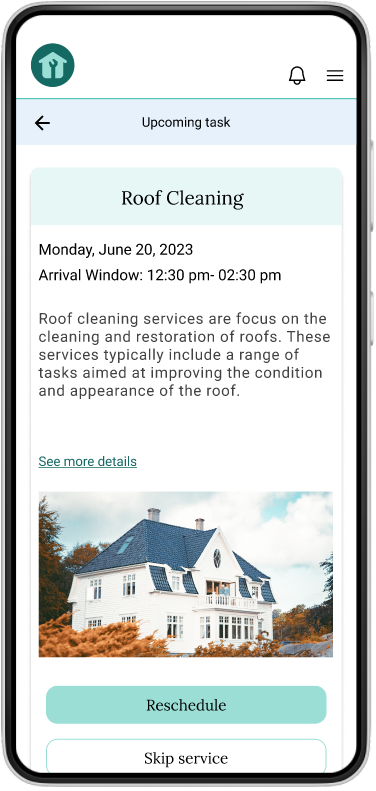
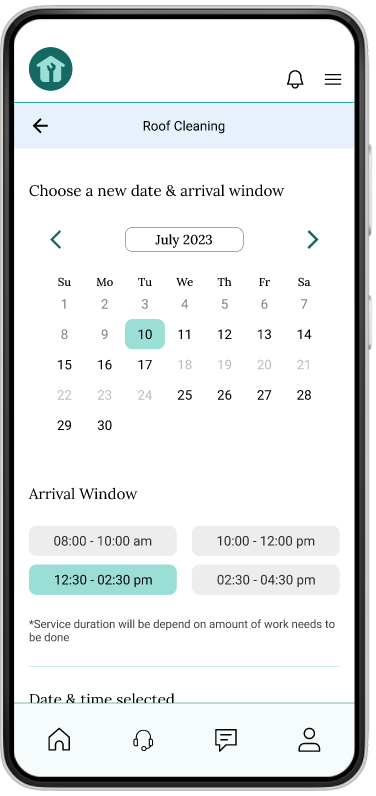
Task 2 Home profile with auto scheduled appointments and rescheduling appointment
Mid fidelity Wireframes
Task 1 New user exploring and purchasing a plan
Task 2 Home profile with auto scheduled appointments and rescheduling appointment
UI Kit
After designing the mid-fidelity wireframes, I had already created components, picked out a type pairing, icon set, and had a good idea of the colors I wanted to use. I decided to go with monochromatic color scheme for this app and knowing that warm colors inspire hunger/appetite, I picked a green color as the brand's primary color. By creating a UI Kit, I could further establish branding guidelines for HandyDandy.
Color choices within UI
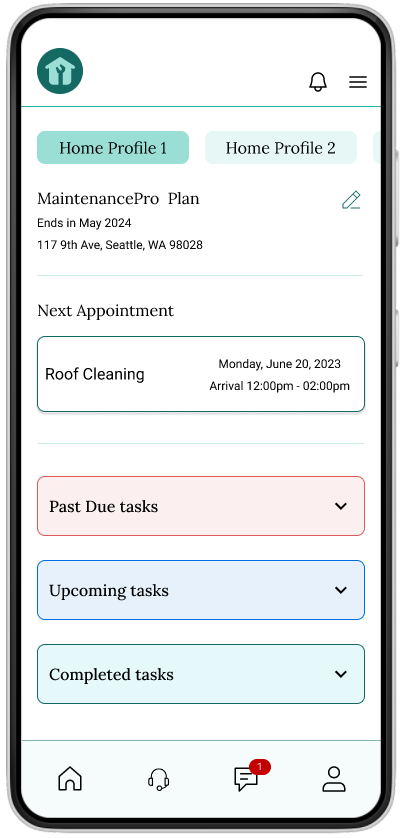
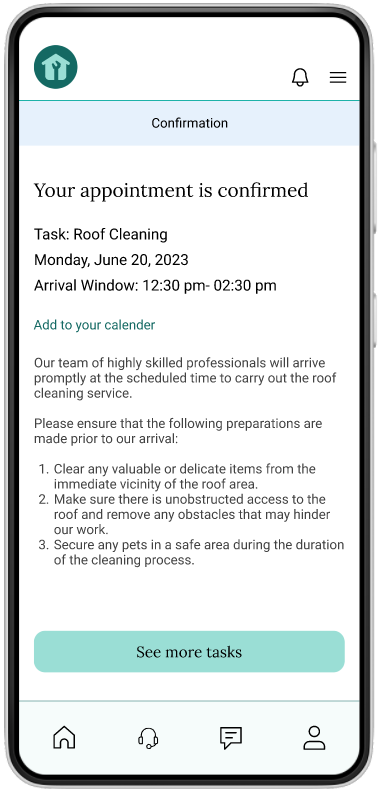
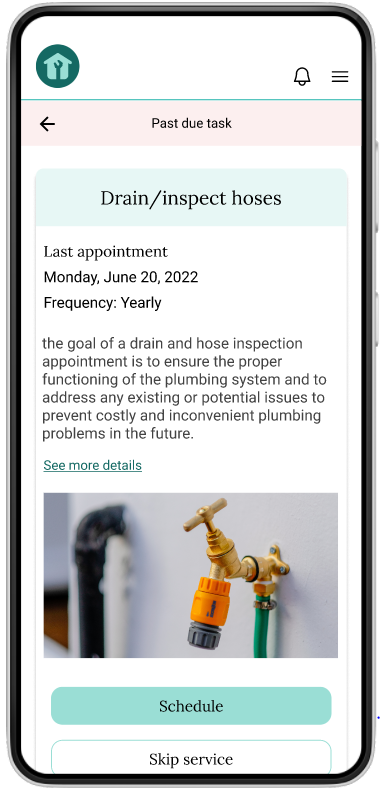
I chose different colors to differentiate user attention on various details based on importance. For tasks that are past due and user should take immediate action, I chose to show in Red. Tasks that user have completed, I chose to show in Green. Tasks that user might require attention to will be shown in Blue. This color theme will follow tasks until it is completed. E.g. Title of the scheduling pages will be of the same color as task in Home page.
If there are no “Past Due Tasks”, the section will be removed and only “Upcoming tasks” and “Completed tasks” sections will be made visible.
Idea Generation
One of the key findings from my user research was that not all homeowners know all the necessary home maintenance tasks. Some homeowners were unaware of the need for regular roof maintenance and inspection, other homeowners were unaware of the need to drain the water heater every year to remove the sediments build up.
Another key finding was that sometimes when user do know what needs to be done, users do not perform necessary actions due to either not having enough time to deal with finding qualified professionals or procrastination or simply trying to save money by reducing the frequency of those actions which puts them at risk of spending larger chunk of money down the road.
With these findings, we will focus on 2 problems here.
How might we help Homeowners with regular maintenance requirements so that we can help reduce the stress and anxiety of maintaining the house?
How might we help homeowners get in touch with the best professionals for routine maintenance tasks with a regular schedule when homeowners are not aware of the tasks that need to be taken care of?
After deliberation it was clear that few things that absolutely need to happen
We need to provide homeowners with inventory of ALL necessary home maintenance tasks with necessary frequency at which they have to be performed
List can be different per house and hence some form of customization based on home needs to be allowed as well
For convenience of the users, hiring and management of qualified professionals need to happen without users' involvement.
Bundling services will allow whole-sale prices for professionals which will allow users to reduce the overall cost and make business more money
Below is the ideation map I created using the above info.
Deliver
High fidelity wireframes
For the 1st iteration, my goal was to validate whether the design helps users to sign up, select a subscription plan and complete the purchase and create a home profile with ease. I also hoped to test the usability of the design, so that I can improve upon it.
House profiles on Home page
To make sure that users with multiple properties using this service don’t get confused, a clear selection of the home profile will be shown at the top on the tasks page. Task scheduling confirmation page will also contain address of the property to remediate confusion.
Information flow
Adding information about a house can be a long list of question, so flow of inputting information is carefully designed.
Beginning with showing plans with price range about the type of house and area to make sure users are comfortable with it
Users enter house information and get final price of plan
If user like to buy, enter house address and other personal information to buy the plan for home maintenance
Before
Usability testing results described that users took long time on plan selection screen as it required them to read and understand all text. Also there was no clear suggestion for what to choose.
After
Feedback from usability testing made it clear that information is clearly not useful and instead causes more distraction. Users understand and know this concepts. Simplified UI based on the feedback.
Measuring success
Measuring the success of HandyDandy involves evaluating various metrics and indicators that demonstrate the effectiveness, user satisfaction, and overall impact of the user interface (UI) and user experience (UX) design. Here are some key performance indicators (KPIs) and methods to measure the success of the HandyDandy App
User Feedback and Surveys: Gathering feedback from users through surveys, interviews, or usability testing is a fundamental way to understand their experiences with the UI/UX. Positive feedback, high satisfaction scores, and constructive suggestions for improvement are all indicators of success.
User Engagement Metrics: Analyzing user engagement metrics, such as time spent on the platform, frequency of visits, and the number of active users, can provide insights into how well the UI/UX design encourages users to interact with the platform.
Conversion Rates: If HandyDandy's platform involves user actions like signing up for plans, scheduling services, or making payments, tracking conversion rates can indicate how effective the UI/UX design is in converting visitors into active users or customers.
Task Completion Rate: Measuring the percentage of users who successfully complete essential tasks, such as user signup, home profile completion, scheduling a service, or accessing maintenance information, can assess the usability and efficiency of the UI/UX.
User Retention and Churn Rate: Monitoring user retention and churn rate over time can indicate how satisfied users are with the platform. A low churn rate and high user retention demonstrate a successful UI/UX design that meets users' ongoing needs.
Heat-maps and Click-through Rates: Analyzing heat-maps and click-through rates can reveal patterns of user behavior and interactions with the UI elements. This information can be used to optimize the UI design for better user flow and accessibility.
Usability testing
I created the Maze link to test my prototype. I provided that link to few of my friends and interviewees from my research with following tasks
Sign up their house on HandyDandy and buy the basic subscription plan
Schedule roof maintenance task with HandyDandy and then reschedule to a later date
Usability testing results were encouraging. All users were able to perform the tasks given without any trouble. The heat-map of clicks show that users were always curious and looking at the tentative schedule before moving on with subscription buying.
Tentative Schedule Feature: Users found the tentative schedule feature to be very helpful in initiating and organizing their maintenance plans. This feature allows users to plan and schedule services with flexibility, accommodating their preferences and availability.
Accessibility Concerns for Color Blind Users: The current UI color theme poses challenges for color-blind individuals, especially those with Red-Green color blindness. Considering that approximately 8% of men and 0.5% of women are affected by this condition, it's essential to make the platform more accessible by adjusting the color scheme to be more inclusive.
Priority revision
Based on user feedback, several valuable insights have been identified for HandyDandy's improvement:
Home profile selection: Users found the whole home profile on a single page to be cumbersome and overwhelming. To improve the user experience, the home profile creation process should be broken down into smaller, more manageable sections, with one question per screen. This would make the process easier to navigate and track progress
Service plan options: Users found the whole home profile on a single page to be cumbersome and overwhelming. To improve the user experience, the home profile creation process should be broken down into smaller, more manageable sections, with one question per screen. This would make the process easier to navigate and track progress
After
Added “Recommended” tag and highlighted the premium plan to attract user attention and motivate to take quicker action, which helped user and business both.
Before
Added the detailed information about what is single family home and what is townhome or condo with image and long text description
Latest Wireframes
Next Steps…
Ala-carte Services/Plans
In addition to offering comprehensive subscription-based plans, HandyDandy could introduce ala-carte options for homeowners who have specific, custom needs. This feature would allow users to select individual services or tasks without committing to a full subscription. For example, a homeowner might choose to select a handful of services within a full list of services and they will get costs accordingly
Notes from Completed Tasks by Technicians
After each service appointment, HandyDandy's technicians could leave detailed notes in the homeowner's profile regarding the work completed, any issues identified, and recommendations for future maintenance or repairs. These notes would serve as a valuable reference for both the homeowner and future technicians, ensuring continuity in servicing the property
Service Provider's Portal
Introducing a service provider's portal would streamline communication and operations between HandyDandy and its network of service providers. The portal could offer features such as job assignment, scheduling, real-time updates, and invoicing. Service providers would have access to job details, homeowner preferences, and notes from previous tasks, enabling them to deliver more personalized and efficient services.
Collaborative Platforms
Establishing an online platform where homeowners can share their experiences, recommendations, and reviews of home maintenance service providers would help others make informed choices. This would promote transparency and improve service quality.